

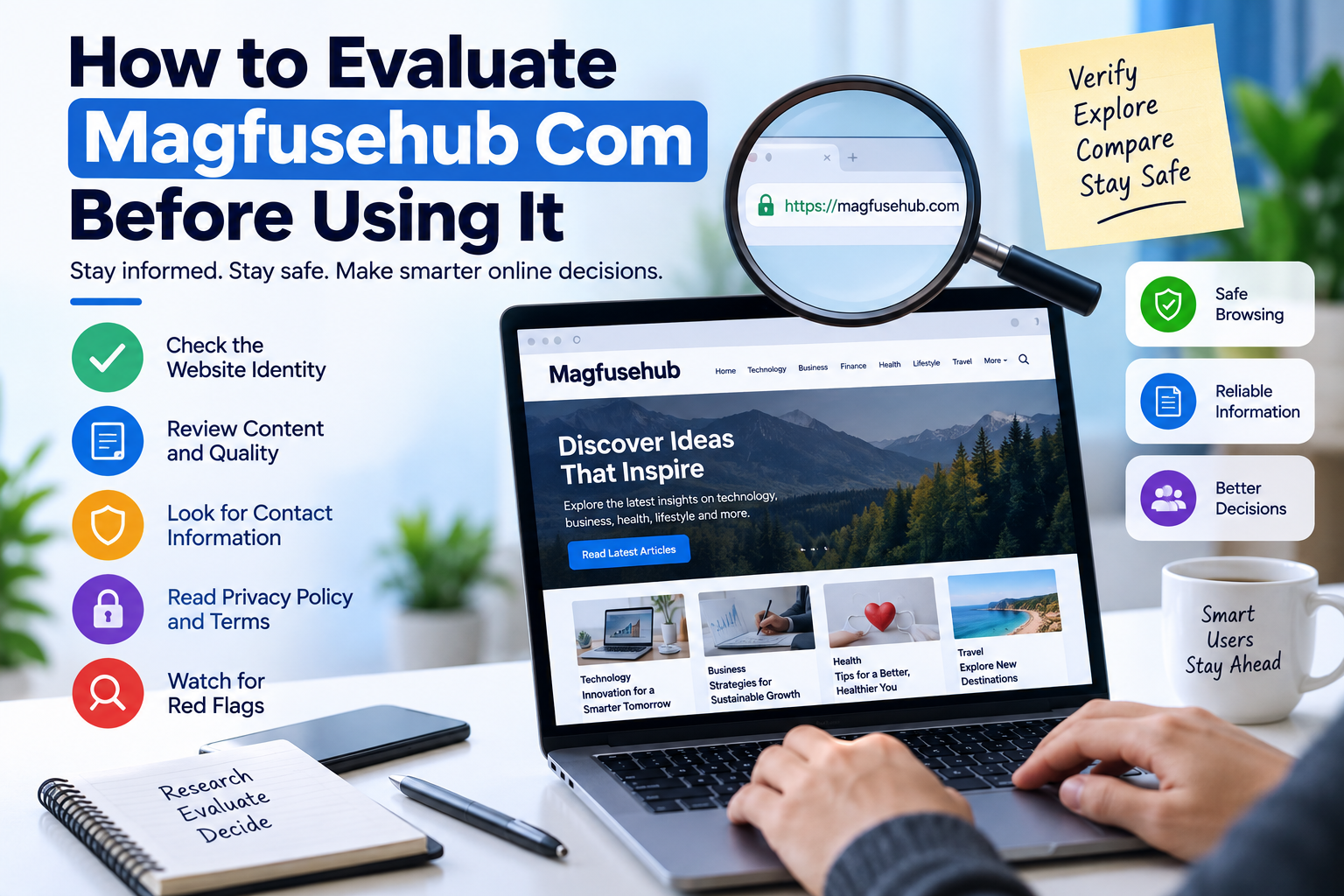

Before exploring any unfamiliar website, it is important to understand its purpose, reliability, and safety. Magfusehub Com may attract visitors interested in discovering online content across different categories, but users should evaluate a website carefully before relying on its information or sharing personal details.
A website’s professional appearance does not automatically guarantee its credibility. Taking a few simple steps can help you make more informed decisions and enjoy a safer browsing experience.
1. Check the Website Identity
The first step is to confirm that you are visiting the correct website. Similar domain names can sometimes cause confusion, particularly when multiple websites use related names.
Before proceeding, check:
- The exact domain name and spelling.
- Whether the website uses HTTPS.
- The website’s stated purpose.
- Its About Us page and contact details.
- Whether the published content matches the website’s description.
Checking these details helps you distinguish the intended website from unrelated platforms.
2. Review the Content Quality
Content quality is an important factor when evaluating any online publication. If you are exploring Magfusehub Com, read a few articles and consider whether they provide useful, accurate, and relevant information.
Look for content that:
- Explains topics in clear language.
- Provides relevant details and context.
- Avoids exaggerated promises.
- Distinguishes facts from opinions.
- Includes appropriate supporting sources.
- Offers information that matches the article’s title.
For subjects such as health, finance, and legal matters, additional verification is especially important. General online content should not automatically be treated as professional advice.
3. Look for Contact Information
A clear Contact Us page helps visitors understand how to communicate with a website’s team. Check whether the website provides a suitable contact method for general questions, corrections, or other inquiries.
You can review whether the website includes:
- An official email address.
- A contact form.
- Information about its editorial team.
- A stated process for reporting errors.
Contact information is useful, but its presence alone does not prove that every claim published on a website is accurate.
4. Read the Privacy Policy and Terms
Before submitting personal information, review the website’s privacy policy and terms of use.
These pages may explain how visitor information is collected, used, and managed. Pay attention to details about cookies, third-party services, contact forms, and any account requirements.
Avoid sharing sensitive personal information unless you understand why it is requested and how it will be handled.
5. Watch for Potential Red Flags
Careful browsing involves recognizing warning signs. Some common red flags include:
- Unexpected requests for passwords or financial details.
- Downloads from unfamiliar sources.
- Misleading headlines or unrealistic promises.
- Missing or unclear website information.
- Security warnings from your browser.
- Claims that cannot be confirmed through reliable sources.
A single warning sign does not necessarily establish that a website is fraudulent, but it can justify further investigation.
6. Compare Information With Other Sources
If you find an interesting article on Magfusehub Com, consider comparing important information with other reputable websites.
For example, information about technology products can be checked against official manufacturer documentation. Travel requirements should be confirmed through government or official tourism sources, while health-related claims should be reviewed using authoritative medical resources.
This approach helps you identify outdated, incomplete, or unsupported information.
Conclusion
Evaluating Magfusehub Com before using it is a practical step toward responsible online browsing. By checking the domain, reviewing content quality, examining contact information, reading privacy policies, and verifying important claims, visitors can make more informed decisions.
A website should be evaluated based on its actual content, transparency, and relevance—not simply its name or appearance.
